Monday, March 30, 2009

“Stuck in Neutral” (It’s a Good Thing!)

I met game designer Peter Olotka at a gathering hosted by the Covenant Foundation, where he made a lively presentation about the power of games as pedagogical tools. Afterward, he generously invited the attendees to pose him this challenge: We would tell him about content that we need to teach; he’d turn it into a game.

As soon as Peter made the offer I thought of the neutral question, which is the key idea in step three of the Critical Response Process. Some people take to the neutral question like ducks to water, but others find it difficult to grasp the idea – so I was intrigued about the possibility of making a game of forming neutral questions.

Once I was settled back at the office, I sent Peter an email explaining how responders in CRP must frame their questions so that they don’t contain implied or embedded opinions. Less than 24 hours later he shot back a fully-formed game structure, and he generously agreed to let me post it to this blog – see below.

I like what Peter has done to put the fun in forming neutral questions. What I especially appreciate is the element of gathering multiple possibilities for a neutral question and the opportunity for each person to function as judge of what makes the best neutral question. I look forward to trying this out soon.

Thanks, Peter!

Stuck In Neutral

Players, in turn, are saddled with an embedded opinion and ask three to seven of their closest friends for help in formulating a Neutral Question.

Goal: To be the player who is chosen as stuck in neutral the most.


How to Play:

  1. Divide players into groups of 4 to 8 players.
  2. Each player is dealt one "Embedded Opinion" card, which they keep to themselves.
  3. A different color set of blank 3x5 cards is available for all.
  4. A Player is chosen to go first and reads their Embedded Opinion.
  5. The other players have 90 seconds to write a neutral question on their cards.
  6. As they are done, they put their questions face down in the center of the table.
  7. When all the questions are in the center, the player whose turn it is shuffles them up and then reads them aloud.
  8. The player then picks one as the most stuck in neutral.
  9. The writing player scored 10 points.
  10. The player to the left now reads an Embedded Opinion" and the game continues.
  11. The player with most points wins the game.

(Optional rule)

The Embedded Opinion player ranks the questions from the most neutral to the least. And players score 10 for the most and 9,8 6, 4, 2, 1 (if necessary).

Building the Game

  1. Make a set of "Embedded Opinions" on 3x5 cards - maybe 20 or so.
  2. Get 3x5 cards for Question Writing
  3. Pens for writing
  4. Sheet for keeping score.
  5. Print out rules for game.

There are a bunch of other ways to do this. One that comes to mind is to give players "Embedded Opinions" on cards and have them read one at a time. In small groups as above, a player to the left has to ask a question aloud. The group then gives it a thumbs UP or DOWN. If it’s UP the player scores 10. Down scores 0 and the majority rules with ties to DOWN.

Thursday, March 26, 2009

Q & A: Amping Up the Rigor in Step One

Occasionally I get calls or emails from former workshop attendees or presenters asking for guidance about matters CRP. Here's a recent one, along with my response.

Q: In facilitating Step One, I find there’s a tendency to say nice things or even to use this part to protect the artist (the whole thing is just perfect!), with less emphasis on meaning. But I remember you and Liz saying: no detail is too small to appreciate. So I'm wondering about the role of observations, affirmations, meaning, detail...

A: Niceness and coddling are basically why Liz stopped calling Step One “Affirmations.” If responders believe that the positive spirit is an end in itself, the feedback will feel “soft,” which can get the Process off to an un-rigorous start. So I’d suggest you experiment with ways that you can describe Step One in advance that will emphasize the rigor. It is good for responders to know that the Step One task is coming, before they see the work, and you even frame it as their commission to look for something really specific that they can note. It helps to state that, indeed, nothing is too small to notice, that assessments of the work as a whole are not necessary, and that responses must be honest (while keeping in a framework of good will). Particularly if you are working with people who are just beginning to develop their critical vocabularies, it can be very helpful to ask people not to start their statements with “I loved” or “I liked,” this alone can force people to be more particular in their statements.

Wednesday, February 4, 2009

Art Takes the Lead? What a Concept!

Colleague Peter DiMuro and I were at Rhode Island School of Design (a.k.a. RISD) last month for a day of CRP activities. Critique is such a pervasive aspect of the academic experience at this elite art school that how it's handled -- good, bad, supportive or brutal -- becomes a central dimension in the lives of students. That is why it was the School's Office of Student Life that took the initiative to bring us in.

Two of the three workshops we conducted opened with the Dance Exchange's "Blind Lead" movement structure, which as usual got people talking about issues and preferences related to leading and following. It was interesting to see the students draw the parallels between this exercise and the experiences they have in critique. One of the questions that came up was, who is leading and who is following, who should be leading or following, in the process of critique? The artist? The people with opinions? The teacher? A facilitator?

The answers were varied, but the one that has stuck with me came from a young woman who said, "Maybe it's the art that should lead the process. Maybe we all could be led by what we see and how we experience the art."

Food for thought.

Tuesday, February 3, 2009

They Asked Me to Name My Biggest Dream, and I Said...


... that everyone might realize their capacity to make art; that we’d never learn to say “I can’t draw,” “I can’t dance,” “I can’t sing.” These activities come naturally – just ask any four-year-old. It is not the doing of them that is the learned behavior. It is the belief that we can't.

Wednesday, January 28, 2009

Broadway's Righteous Demon

Let us pause for a bit of gossip, shall we?

It’s been all over the internet since it happened a week or two ago. I caught up with the news last night on an opera blog, of all places. Broadway star Patti LuPone, performing the climactic “Rose’s Turn” scene in Gypsy, stops the show to confront an audience member who has taken several flash photographs. “Who do you think you are?” she rants repeatedly, before resuming the number as the transgressor is ejected from the theater. (In an ironic twist, the moment was captured for posterity by another audience member concealing a sound recorder.)

Reading the online chatter, it’s fascinating how starkly opinion is split between those who see Patti LuPone as the avenging angel of audience etiquette and those who regard her as an unprofessional bitch. For my part, my sympathies tend to lean toward Ms. LuPone, as I consider the cardinal sin of flash photography in theatrical settings justifiable provocation for the lesser sin of breaking the forth wall.

Also, as a person who works behind the scenes in the performing arts, I have to wonder. If ushers and security are really doing their jobs, shouldn’t a performer be protected from ever having to take such extreme action? I’m going to indulge in my own pet sin of self-righteousness here for a second: Years ago when I spent a summer stint as an usher at an arts festival, we were trained to confiscate cameras on a strict no-tolerance policy. We used to try to outdo one another in our vigilance at nabbing shutterbugs before they became pests.

Finally, what is it with people’s need to generate digital evidence of everything they do? I love my camera as much as anyone, but I have to ask: Do I need my own photo or sound recording of Patti LuPone in full cry in order to prove that yes, I saw her in her much-lauded portrayal of Mama Rose? I can’t help but wonder that with all the media at our fingertips -- the ability to record, replay, and distribute practically anything we are witness to -- we lose the capacity to remember our own experiences and to evoke, unaided, those memories for ourselves and others. Could we put aside the digital devices and rely instead on skills that enable us to notice, listen, observe and later to describe and reflect on the experiences we’ve had? What a concept!

My late mother saw Tennessee Williams’ A Streetcar Named Desire in its original Broadway run 60-some years ago. Years later she could describe to me how Marlon Brando “talked like he had a mouth full of potatoes.” I treasure that connection to theatrical legend far more than I think I could prize a bad flash picture of Brando.

Sunday, January 25, 2009

The Creative Making of Barack Obama


In the Inaugural festivities of the past week it has been interesting to note how, from varied corners of the globe -- Africa, the Islamic world, the Pacific rim, not to mention many sub-sectors of our own society -- people are seeing themselves reflected in the identity of our quintessentially American new president. From what I know of Mr. Obama’s biography, here’s what I find most inspiring in the phenomenon of the one-man melting pot who has attained our nation’s highest office: That a person with his variegated pedigree and transient upbringing, who might well have said “There’s nowhere that I belong,” chose instead to live by the conviction “Anywhere I go, I belong.” Obama is, in fact, a paragon of what Liz Lerman calls active belonging. And the “active” in active belonging requires more than mere conviction, as the career that led to the presidency attests. That career is a story of sheer will, pushback against rejection, and the calculated choice to belong and to appear to belong. It is through active belonging that Mr. Obama shaped himself into a masterpiece of self-invention.

At the risk of indulging in the new national pastime of projecting cherished personal values and aspirations onto our shiny new Chief Executive, I’m going to hazard an interpretation. Mr. Obama developed his capacity for active belonging in tandem with three qualities that make his leadership style especially refreshing: He listens, he learns, and he is remarkably free of defensiveness -- indeed the lack of defensiveness is, to my mind, the key to the “No-Drama Obama” mystique.

I won’t belabor the parallels between those leadership qualities and the values of the Critical Response Process. But I think it’s notable that Mr. Obama has explained his desire to hold onto his Blackberry as partly the need to bypass the presidential security bubble so that he can remain open to critique from people beyond his immediate circle of advisors. If he is sincere, it is a very hopeful sign, because now more than ever the Presidency is a work-in-progress. And as we know, a viable work-in-progress requires a good feedback system.

(A note about the photo: The Happy Dragon, above, is one of the characterful denizens of the Dance Exchange's hometown of Takoma Park, where he resides in a side yard just a few blocks from our headquarters. He regularly gets festooned for various holidays, and for the past week he's been sporting the Inaugural regalia shown in the picture, which I snapped on Friday morning.)

Thursday, January 22, 2009

Blog Buzz: From Art School to the Jury Box

The Critical Response Process "actually seemed to open up the space for people to feel more empathy for the artist's process and offer opinions that were coming from a more informed place." That's according to blogger Pete Hocking, who reported on the CRP presentations that colleague Peter DiMuro and I made last week at Rhode Island School of Design (RISD). Critique, or "crit" as they call it, is a way of life at RISD, which made the students at this renowned art school a discerning and demanding audience to play to. Check out the post at RISD Public Engagement (including a photo of yours truly doing a crazy hand jive) and watch this space for more reflections on our RISD experience soon.

And this from quite a different domain of practice: Critical Response Process "wouldn’t need much adjusting to make a fine template for jury deliberations." Those are the words of Anne Reed, a trial lawyer and jury consultant in Milwaukee who maintains the blog Deliberations, which focuses on "law, news, and thoughts on juries and jury trials." I won't tell the circuitous story of how she encountered CRP -- you can catch up with that on her post -- but I will mention how tickled I was to have a drawing of mine picked up by her online American Gallery of Juror Art. Anne is clearly a person of with a broad and humane grasp of the legal discipline, and I was delighted to see how CRP caught her interest.

Wednesday, December 17, 2008

Common Sense, Profound Sense: A Message from Ireland

Liz Lerman has just returned from a jaunt to Ireland and England where she led workshops on Critical Response and other methods. At the Abbey Theatre studios, through the cooperation of Create, she taught and facilitated a CRP session with Irish choreographer Ríonach Ní Néill. Rionach presented her work Seandálaíocht (Archaeology), which she describes as “a highly personal exploration of the paradox of a language only spoken by one person.”

Rionach reflected on her experience with CRP in a message she sent to Liz and some of the workshop sponsors, and graciously granted permission for me to excerpt it here. I especially appreciate hearing her “next steps” and her reflections on the implications of Critical Response in an Irish cultural context. Thank you, Rionach.

“It was a privilege to me to present my work for the critical response workshop. I knew that, concerning identity and the Irish language, it dealt with a very sensitive issue in the Irish psyche and that everyone would have an opinion and an emotional response to it…. The workshop gave us the tools to engage with each other and the work, the method providing a safe place for the audience to give, and me to receive, feedback, and yet for us to be as honest and direct with our opinions as we needed. It was such an enriching experience for me. I have so much information to process and perspectives with which to revisit the work with further clarity and depth. I will be viewing the work as starting from the programme note. I will be examining how, without compromising its and my truth, it can communicate more precisely across a language barrier. And I will be enjoying performing it, as I now realise that it can say what I want to convey.

“I think the method is of particular use to us in Ireland, a point that arose in the workshop. Although words and the Irish are intrinsically linked, I think our love of the beauty of the sounds, the verbal landscapes and dances we can create with words, sometimes obscure the meanings. We use language to delight, to amuse, to dazzle, but maybe not so well to communicate. And so we are not so good at criticism, in fact, criticism here is usually equated with negativity. The method, in its polite neutrality, made us take responsibility for our thoughts, and made us focus on what we were really saying and really hearing. Common sense maybe, but a very profound sense.”

Friday, December 5, 2008

Notable Quotable: Woody Allen

This master of mordent humor might be answering the question: How do you measure success?
If you're not failing every now and again, it's a sign you're not doing anything very innovative.

Wednesday, December 3, 2008

The Lens of Love


Yesterday I was in Manhattan working with fabulous colleagues from Liz Lerman Dance Exchange and Facing History and Ourselves. Our two organizations co-facilitated a workshop for New York City-area school teachers.*

As with many Dance Exchange workshops, this one culminated with teams of participants showing short text-and-movement studies that they had created using tools and content shared in the day’s activities. Fabulous colleague Elizabeth Johnson (Associate Artistic Director of Dance Exchange, seen at far right in the above picture) facilitated the presentation of these Build-a-Phrase dances. In her introduction she said something like this:

You’ve worked quickly. None of us have had enough time. When you do this with your students, they will not have enough time. So, as we watch I’d ask you to keep in mind the idea of work-in-progress. I’d like you to look through the lens of love and set aside judgment for the time being. After each showing we’ll talk about what we saw, so be thinking about what is meaningful, surprising or memorable about what you are watching, or what you might want to take away.

As I listened and watched, it occurred to me that here was another answer to the question “Can you just take parts of CRP or do you have to do the whole Process every time?” For in moments like this, we often employ a modified Step One as the primary means of reflecting on the choreographic quick-studies that people have produced. It affords a shortcut to insights and learnings that both makers and watchers have gained in the course of their shared experience.

“The lens of love” is a phrase I’ve heard Elizabeth use before. Later she reminded me that it was former company member Marvin Webb who was the first to use it at the Dance Exchange. These words struck me afresh as being just right for the moment we were in. While I wouldn’t recommend it for use during a formal CRP, I think it’s a great fit near the close of a day in which a group of people, primarily new to each other, have made themselves vulnerable, stretched their comfort zones, and built community. Its affirmational spirit is balanced by the rigor of the questions that accompany it. And it names the moment nicely, because when you’ve got a room full of teachers as committed as this group, you’ve got a room full of stong, active, no-nonsense love.
________________
*This workshop was part of an ongoing program in which we’re combining aspects of Dance Exchange’s Small Dances About Big Ideas with Facing History’s Choosing to Participate curriculum. It offered methods for applying movement and artmaking techniques to teach about active citizenship and standing up in the face of injustice. Dance Exchange’s work with Facing History is supported by grants from the Covenant Foundation, the Nathan Cummings Foundation, and the Maxine Greene Foundation.

Monday, November 24, 2008

Build Feedback and They Will Come

On Saturday, as part of FotoWeek DC, I was at my photography home-base, Photoworks Glen Echo, taking part in a digital portfolio review session. Photographers, both fledglings and veterans, had the opportunity to show a selection of images that they brought in on discs or flash drives to be projected on the wall. I was invited to be one of the reviewers, a new experience for me. Here, in no particular order, are a few observations from that experience:

1. People really want the feedback experience. We had high participation in this event, much of it from folks who'd never been to Photoworks before. It seems that if you just hang out the shingle and say you are offering critique, folks will show up. Why? Some of it is a desire for guidance, since most of the photographers were asking for advice about organization or how to shoot better. But a lot of it, I believe, is the desire to connect, to get the artwork out of the realm of the personal and into some kind of forum where it is connecting. It is so interesting to note how keyed up, excited, nervous, just plain alive people are in the moment when a room puts its undivided attention on their work.

2. It is strange to be positioned as an authority. This was a situation where I was one of two, sometimes three, people in the room designated to offer comments. At times I felt much more qualified as a kind of articulate audience member than as a person especially knowledgeable about photography. In a way it was freeing to be set up as an authority, kind of like putting on a mask.

3. In some ways, it is much easier to be asked to comment as an authority figure than it is to take part in a feedback dialogue of multiple, equalized voices. It's easy to rattle off your reaction to something. What we ask responders to do in a CRP session actually requires a level of listening, thinking, processesing, weighing, choosing to speak or keep silent, that is highly demanding for those who really invest in it.

4. Questions are really powerful. I felt as a commentator that I had the most chance of being useful when the photographers brought not only their images but their questions to the table. And I had the most chance of getting through to something valuable for the artists when I was able to form a good question for them to think about. But we knew that, didn't we?

5. Editing is artistry. Photography is an artform that puts this principle in high relief. What you create is just the beginning. How you choose from what you create is where voice and meaning truly emerge.

Wednesday, November 19, 2008

Stop the Misery!

Sometimes you just have to go negative in order to make a point. That was my reaction upon reading “How To Feel Miserable as an Artist,” a ten point list that is currently going viral in the arts world. It arrived at my desktop courtesy of Dance Exchange artist Ben Wegman, and I’ve traced it to the blog of artist/author Keri Smith – someone who is new to me, but whose work I definitely plan to check out in greater depth.

Looking over this list I’m struck by how many of these sources of artistic misery stem from two questions: How do we measure success? and What constitutes approval?: Ultimately, while acknowledging all the external forces (family, money, clients, society) that bear on an artist’s sense of self-worth, Keri Smith is clearly preaching that artists need to look within for the final measure of their own value.

What does this mean for critique? Maybe that it’s overvalued. Maybe that artists need to strengthen their own internal voices within the dialogue of criticism. Maybe that we can take nothing for granted in terms of how we measure quality.

Friday, November 14, 2008

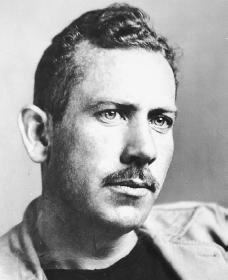
Notable Quotable: John Steinbeck


A guy at my gym this morning was wearing a T-shirt that read:

"No one wants advice -- only corroboration."
--John Steinbeck
I wonder if Steinbeck was thinking of creative matters. It certainly holds a grain of truth when applied to artistic works-in-progress. When we put such work forward for comment, there’s often a part of us that wants most just to get confirmation that what we’ve done is brilliant and doesn’t need any fixing.

Can we manage that desire? Can we channel it constructively? Should we just get over it?

The theory of the Critical Response Process on this issue might be: Step One provides the corroboration that something, at least, is working, something is conveying and communicating. Having that impulse fed, even to a limited degree, helps open us up to hearing more -- even advice.

Thursday, November 13, 2008

Well, Yes and No...

Here’s another reflection about Critical Response Process emerging from our recent work in Boulder, as passed on from an artist in that community by ATLAS’s Rebekah West:


(some artists) argue people use "parts of it." My thought is that you either use the whole "container" or you do not use it. Using convenient "parts" does not get it done!!!!
This comment raises a stimulating question: Can you use just parts of the Critical Response Process and still have an effective feedback experience? I’ll offer the Yes answer and the No answer:

Yes. Once you’ve learned the Critical Response Process, you may well find such concepts as the Step One comment, the neutral question, and the permissioned opinion to be very useful on their own. They can be effective when used with colleagues who are versed in CRP and who grasp the bigger context, but they also can be applied “stealth style” with people who may have no idea where you are coming from. (Using Step Ones in particular – naming meaningful details and citing stimulating connections – may lead you conversation partner to decide that you are very intelligent!) And once people get their legs in CRP, it’s possible to jump from a step one to a step four in a quick exchange. But beware – and this is the caveat on the “Yes” answer -- when the Process is thus “sampled” you may have useful tools for a feedback conversation, but you don’t have a full-fledged critique process. Every now and then you need one.

No. The elements of the Process have been refined over time and sequenced for a reason. Mess with it at your peril. Now, maybe there’s been some cherry picking of CRP somewhere that has effectively combined it will other elements, but I haven’t seen it. I have seen some train wrecks, though, when folks have played fast and loose with the Process.

My final advice? Do the Process in its full form a bunch of times. Get to know it well. Stay curious even as you encounter challenges with it. Don’t try adaptations or extrapolations until you feel secure with CRP in it four-step format.

Wednesday, November 12, 2008

Quack!

Speaking of variations on the Critical Response Process, I heard about the following mode of critique being used in a college level drama class. After a showing, the instructor poses three questions:

What do you see?
What do you love?
What are your questions?

“Isn’t that just like the Critical Response Process?” I was asked.

Well, no.

But I can see the resemblance. In common with CRP is the value placed on inquiry and observation, and the good will implied by that big-hearted “Waddaya love?” But in the nuance between this and Critical Response lie some major differences. CRP’s opening round, which is initiated by the facilitator’s question “What was exciting, stimulating, meaningful, memorable?” offers both more focus than “What did you see?” and more range of possibility than “What did you love?” -- and does so in one question rather than two. The responder isn’t required to love anything, and the process isn’t premised in the idea that the artist needs to be loved. Big difference.

What about “What are your questions?” It’s always good to ask for questions. And it’s even better to ask for neutral questions (CRP Step 3) because the discipline of framing neutrally helps the questioner and opens up the dialogue with the artist.

What quacks like a duck may not swim like a duck.

And in that case, it’s not a duck.

Monday, November 10, 2008

Pervasive Process?

“I don’t think the Dance Exchange folks realize how pervasive the Critical Response Process is. Every artist in the United States who has any form of critical response is using a derivative of the CRP.”

A comment to that general effect was passed on to us by Rebekah West, who recently hosted a small Dance Exchange team for Critical Response activities at the ATLAS Alliance at the University of Colorado, Boulder. In her email reporting this comment, she asked what I thought.

Here goes: I’m a little skeptical given the absolute quality of the comment. But Critical Response Process definitely has a life of its own out there beyond the institution where it began. It is in the nature of a technique like CRP that it may get passed hand-to-hand, or mouth-to-ear, on a kind of oral history basis. Hence derivatives are inevitable. Some of them are probably thoughtful adaptations for the needs of a particular setting and use; some may turn out looking like more distant relatives (I’ll admit I’m resisting the urge to use the work “bastardizations”); and sometimes worthy practices may have features in common with CRP but descend from separate lineages.

I definitely hear reports of CRP thriving in places where we had no idea that it was being used. I also encounter plenty of people in the arts field for whom it is entirely new and surprisingly different from what they are used to. And then I hear people describe what they think is CRP or “just like your process,” when in fact what they are describing is different in one or more essential features.

Frankly, it is a challenge for Dance Exchange as an institution to keep track of where the Critical Response Process gets used, who’s doing it, how it gets varied, what’s a practice we’d endorse and what isn’t. We have ongoing discussions in our offices about getting an intern to do research on CRP’s use in the field and about the desirability/feasibility of setting up a certification program. The most realistic position for us at this point is to do our best to be a resource with our book, trainings, and now this blog; and to continue to act as a kind of laboratory probing deeper and wider into the applications and implications of a process that's clearly too big to be contained by just the institution that started it.

Tuesday, November 4, 2008

This Is Also a Form of Critical Response...

This fine woman was first to vote at our precinct in Takoma Park, Maryland. "I'm not usually first," she said, "but I wanted to be first today." You go, voter!

Sunday, November 2, 2008

Genial Taskmaster

Today's New York Times includes an article on Donald Palumbo, who recently took the reins as chorus master at the Metropolitan Opera. Thinking about the topic of artistic leadership styles (addressed in my "screaming and throwing chairs" post last week), I was struck by the following passage, which quotes Mr. Palumbo as he gives notes to the chorus preparing for the Met's new production of Berlioz's Damnation of Faust:

"“No, your ‘hélas’ must not sound like whining,” Mr. Palumbo urged. “The color is too bright and high. ... Articulate with more pulse. ... Trust your instincts, and go with it when the harmonies weave together. ... Basses, on that ‘tra-la-ho-ho’ passage, give me more boom and a less churchlike ‘ho.’... Can that phrase bloom rather than just explode? ... Grab every note of this rising passage. Don’t just run up the scale. ... The chorus of celestial spirits must be completely passive, with no forward pressure on the voice at all. Soft but specific. Don’t ooze into the note.”

The specificity of this language is just bracing, and I think it's notable that in every case where he cites a "don't" Palumbo also gives a very directive "do." No screaming or throwing chairs. The article notes the marked improvement in the work of the Met chorus since this "genial taskmaster" assumed his post.

Friday, October 31, 2008

Switching Hats

The Critical Response hat isn’t the only hat I wear. And sometimes when I’m wearing one of those other hats, I can’t get into the Critical Response hat quite as fast as I’d like to.

Case in point: this past Sunday I was at the photography education center where I’m active, Photoworks Glen Echo. I was leading the workshop that I teach once or twice a year, focused on the craft of combining words and pictures. I guess you could say I was wearing my teaching hat as opposed to my facilitating hat, my aesthetics hat as opposed to my critique hat, my Photoworks hat as opposed to my Dance Exchange hat. Not that any of those terms are mutually exclusive, but -- contrary to popular rumor -- my head is only just so big.

There comes a point in most photography classes when a student will spread prints out on the table, or post them on a board for viewing. People who frequent photo workshops are conditioned to treat this as critique time. And once it’s critique time, if the teacher doesn’t firmly establish a format from the outset, the conversation can pretty much slide anywhere. Which is what happened when one of the workshop participants laid out a series of portraits for a book she is planning.

Now, it wasn’t a disaster by any means. The artist was accomplished, so there was plenty of admiration for both the technical quality and the substance of her work. She had already stated her challenges and options for adding words to the images during the workshop’s opening round of introductions. But as soon as she put down a page of text next to one of the photos to show us how a spread in her book might appear, the fix-its started flying. “Make the text shorter.” “Use this sentence here, this is the essence.” “Put the interviews in the back of the book.” “You could try making some of the text larger, like a call-out in a magazine.” (Full disclosure: some of those fix-its came from me, since by that point jumping into the melee seemed the best way to offer my guidance.)

Lots of stuff starts going on in my own head in a moment like this. As a teacher, I wonder if I’m losing authority or if my opinion counts less because other people in the room have strong directives to offer. I’m trying to check the emotional temperature of the artist whose work is on the table – is she taking this in or is she shutting down? I’m weighing the merits of such fix-its against the value of good questions or less directive statements, multiple options against the one-problem, one-solution model. Lastly, I’m looking at the clock, since we’re already behind on the schedule for the afternoon.

The Critical Response Process, of course, offers help in all of those challenges, except perhaps the time constraint. And time is probably the reason why I didn’t step back, put on the CRP hat and try to redirect the interaction.

I always say that I consider an event a success if I know how I’ll do it better next time. So next time, while not necessarily engaging in a full-blown Critical Response session, I’ll probably do the following:

--Get the artist to talk about her challenges when she shows her work as opposed to much earlier in the workshop.
--Mindfully mention as the prints are placed on the table that this marks a transition where we’re likely to move into critique mode, and set some guidelines
--Encourage people to take a step back from the fixit: Can they frame the principle behind the suggestion they want to make rather than telling the artist what to do differently? Then I'd try to follow that principle myself.

As Liz often says, our impulse to fix another artist’s work can be a highly creative one. Channeling that impulse for the benefit of both people in the dialogue is the challenge. More on that topic soon, I hope.

It’s 5:30 in the evening, so please excuse me while I change into my Halloween hat.

Tuesday, October 28, 2008

Blog Bounce from Boulder


Artist/filmmaker Laura Tyler was on hand eariler this month in beautiful Boulder, when Liz Lerman -- along with Dance Exchange Production Manager Amelia Cox and me -- made some presentations at the ATLAS Alliance of the University of Colorado. Our little team was there to talk about quality, collaboration, the art/technology connection, and, naturally, Critical Response. Laura filed her incisive impressions on her own blog, so check it out.

I am particularly stimulated by what Laura says about the relationship of self-assessment to the passage of time. Fit fodder for future reflection!